Beranda > Artikel
Identifying Roof Problems
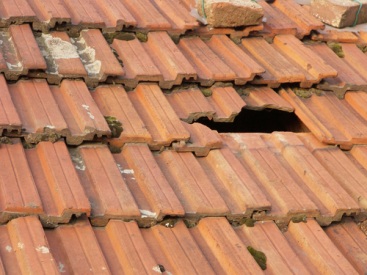
Many contractors are tasked with one difficult task: identifying roof problems. Here's our list of common areas to inspect and find these roof problems. While there may be different areas you should investigate, these are the most frequently encountered scenarios.
1. Weathering
A roof that has been severely damaged by weather. Roofing materials deteriorate with direct exposure to inclement weather. Inorganic roofing materials are less susceptible than organic materials. Exposure to pollutants or industrial atmospheres can accelerate the deterioration of your roofing material.
2. Lack of Maintenance
An unbalanced roof system. This most often occurs on flat or low-slope roofs. Failure to correct an unbalanced roof will lead to sediment and water accumulation that will eventually destroy your material.
3. Design Issues
Related design issues are expensive to fix, and corrections usually must be made while the roofing material is being replaced. Some examples are:
- A weak structure supporting a roof that may deflect excessively under active loads
- Improper roof slope, sagging, or inadequate drainage systems, leading to water accumulation
- Improper systems that allow expansion and contraction due to changes in deck material or direction
- Incompatible roofing materials
4. Wind
The effect of wind on the roof. The vacuum and uplift pressure created by wind, blowing against the roof edge, can tear off portions of the roof membrane or the installed system. The roof and insulation must be fastened and secured to the perimeter and to the main roof structure to counteract the forces being exerted on the roof.
5. Flashing Material
The function of flashing is to provide a watertight seal between the roofing material, the roof members, and the rest of the building. This is an area that should be carefully inspected before any other area. Incorrect installation or installation procedures, and improper sealing of the flashing will allow water to enter between the roof system and the roof structure. Sometimes, installing flashing over the joints or caps will eliminate the problem if detected early in construction.
6. Base Flashing
Conspicuous problems also present some serious and important issues that you should check. Some common causes are:
- Insufficient base pile
- Incorrect height
- Insufficient overlap
- Poor adhesion, improper bonding to the surface
- Insufficient seams
- Loose insulation
7. Penetration Flashing
Whether small or large, penetration flashing can fail in several ways. For example:
- Improper design
- Damaged seams at the metal edges due to building movement
- Unbalanced counter tops
- Improper metal surface finish
- Standing water behind sidewalk penetrations.
8. Drain Flashing
This is not a simple matter because it involves installing multiple drain holes. A building's drainage system should consist of reasonable drain openings, adequate pitch from high points to drainage components. It is good practice to include overflow drains through various areas to prevent water accumulation in an emergency. Proper care should be given to all of these areas.
9. Roofing Equipment
It is easy to install air conditioning compressors, satellite antennas, and other components directly onto the surface. Proper care must be taken when installing this type of equipment. They should never be mounted or placed directly onto the top of the roof membrane. They should be attached to a supporting structure or raised curb-type support. Flat flange or curb flashing can then be used to keep the roof watertight, and roof replacement and restoration can be performed without disturbing or removing equipment.
10. Metal Base Flashing
This type of flashing will separate easily from bituminous materials. The expansion and contraction of both materials will create cracks and gaps that will allow water to penetrate and damage the surface. For this reason, metal base flashing should be replaced with bituminous base flashing whenever possible.
 Bahasa Indonesia
  Inggris














.jpg)