Beranda > Artikel
4 Unique Features of the Rumah Gadang That Have Am
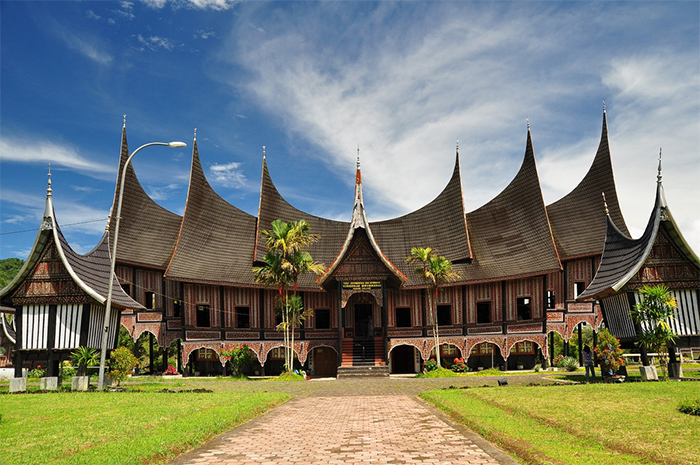
This is perhaps one of the most common traditional houses found in various regions across Indonesia, especially the capital city. This is understandable, as most Minang-style restaurants use the rumah gadang roof design. Rumah gadang is a traditional dwelling known for its unique roof. Its distinctive curved roof is iconic and is even worn as a headdress in West Sumatran traditional attire. As one of the nation's many cultural treasures, the rumah gadang boasts a wealth of unique features. This article will discuss four distinctive features, including the parts, functions, and interior of this Minangkabau house.
1. Rumah Gadang Roof
The pointed roof has been a hallmark of traditional West Sumatran houses. This roof, called gonjong, is made from palm fiber, similar to the roofs of traditional Papuan houses. History records that the gonjong design has remained unchanged since the Pagaruyung kingdom. Today, gonjong is often used as an ornament in Minang restaurants or Padang-themed buildings. Therefore, it's no surprise that Padang-style houses are easily found in various regions of the archipelago, much like adaptations of Balinese traditional house designs.
2. Wall Carving Motifs and Colors
The beauty of Padang houses is enhanced by the presence of carvings that adorn certain parts of the building. The origins of the wall carving motifs are philosophically closely linked to Islamic values. These carvings are based on the "adat basandi syarak," which is guided by three philosophies:
- Ukue Jo Jangka: Meaning measuring using a compass.
- Alue Jo Patuik: Meaning paying attention to flow and propriety.
- Raso Jo Pariso: Meaning relying on feeling and examining geometric shapes.
All carving motifs draw from the beauty of nature and the environment, including plants, everyday utensils, and even animal names. These interior designs are similar to the carvings on parts of traditional Central Javanese houses.
3. Building Design
Similar to traditional West Javanese houses, Minangkabau dwellings are built high, commonly known as stilt houses. Padang traditional houses are deliberately built high to prevent the entry of wild animals. Although the rumah gadang is built at a relatively high elevation, it is resilient to various weather conditions. Minangkabau traditional houses have even proven resistant to strong winds and earthquakes. Another unique feature of the rumah gadang is that the rooms are designed according to the number of daughters in the family. Married daughters are given a separate room to share with their husbands.
The same applies to unmarried daughters, who share a single room. The size of the room, of course, depends on the number of daughters.
4. Stairs at the Entrance
All the ornaments in a traditional house are inseparable from philosophical meaning. This includes the position of the stairs leading into the house. There is only one staircase in each rumah gadang, placed at the front door. The meaning of the single staircase is closely related to the Islamic religion practiced by the Minangkabau people, symbolizing belief in the One Almighty God. Modern architecture should reflect on the excellence of traditional houses throughout the archipelago. In addition to being durable and sturdy, the rumah gadang, like the traditional houses of other ethnic groups, utilizes natural, environmentally friendly materials.
 Bahasa Indonesia
  Inggris












.jpg)